

Bilge Brew Coffee and Breakfast Rituals: A Practical Morning Routine (Without the Guesswork)
Breakfast coffee is less about chasing “perfect tasting notes” and more about building a routine you can repeat—half awake, short on time, and still end up with a cup that tastes solid. That’s where a dependable, roasted-to-order coffee and a consistent brewing method earn their keep.
Bilge Brew Coffee Co. positions itself around that kind of reliability: straightforward coffee, clear roast styles, and a brand identity rooted in no-drama consistency. This article breaks down what matters for a “breakfast ritual” coffee (bean choice, freshness, brew method, water), plus simple pairing ideas that work in real life.
What a “breakfast ritual” coffee actually needs
A good breakfast coffee usually checks four boxes:
-
Forgiving flavor: tastes good even if you’re not measuring to the gram
-
Comfortable profile: smooth body, controlled acidity, no weird aftertaste
-
Consistency: similar results day to day
-
Low friction: fast brew method, minimal cleanup
If your morning cup tastes “flat” or randomly harsh, it’s usually not your taste buds. It’s stale coffee, inconsistent grind, or a brew method that doesn’t match your schedule.
Helpful reference on roast timing:
Coffee Roast Date Explained — https://bilgebrew.com/blogs/from-the-bilge-blog/coffee-roast-date-explained
Choosing a breakfast coffee: roast level first, origin second
Most people do best with a medium or medium-dark coffee for mornings because it balances sweetness and body without requiring perfect technique.
-
Medium roast: balanced, usually the easiest daily driver
-
Medium-dark: heavier body, more “bold,” lower perceived acidity
-
Dark roast: intense, can taste great when brewed correctly, but can go bitter if over-extracted
Bilge Brew examples (as reference points, not prescriptions):
-
A straightforward medium “daily” option: LIBERTY — https://bilgebrew.com/products/liberty-medium-roast-house-blend
-
A smooth medium profile: MARITIME ROAST — https://bilgebrew.com/products/maritime-medium-roast
-
A heavier, darker direction: GENERAL QUARTERS — https://bilgebrew.com/products/general-quarters-medium-dark-roast
-
Espresso-style morning strength: ANCHOR ESPRESSO — https://bilgebrew.com/products/anchor-espresso
If bitterness is your recurring issue, fix technique before switching to sugar. This is a good breakdown:
What Makes Coffee Taste Bitter (and How to Avoid It) — https://bilgebrew.com/blogs/from-the-bilge-blog/what-makes-coffee-taste-bitter-and-how-to-avoid-it
Caffeine: more isn’t always better, but it should be predictable
Some people want a gentle morning cup. Others need “don’t talk to me yet” fuel. If caffeine is the goal, you have two clean levers:
-
Brew strength (more coffee per water)
-
Bean type (Robusta tends to carry more caffeine than Arabica)
If someone wants higher caffeine without relying on energy drinks, a Robusta-including coffee can make sense. Example:
ATOMIC (higher caffeine) — https://bilgebrew.com/products/atomic-medium-with-robusta
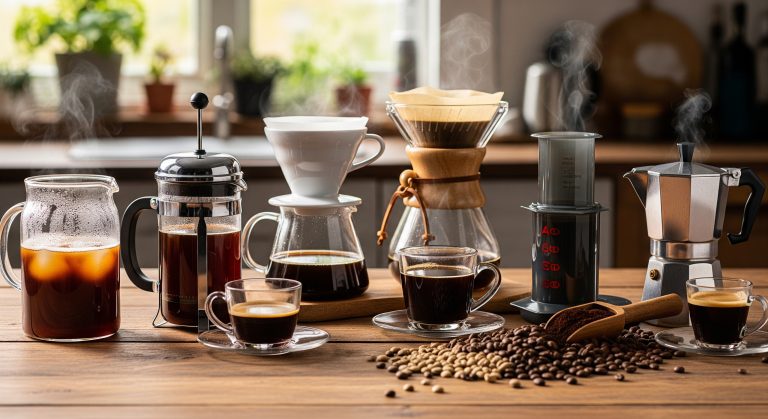
Brew methods that actually fit breakfast life
Pick one method and get consistent before you add complexity.
Drip machine (best for speed + volume)
Most households already own one. The quality jump comes from using fresh beans and correct ratios.
Baseline:
-
Start around 1:16 (example: 30g coffee to 480g water) and adjust to taste.
If you want a direct comparison of “drive-thru vs brew at home” habits (useful for framing your morning routine content):
Drive-Thru Coffee vs Brewing at Home — https://bilgebrew.com/blogs/from-the-bilge-blog/drive-thru-coffee-vs-brewing-at-home
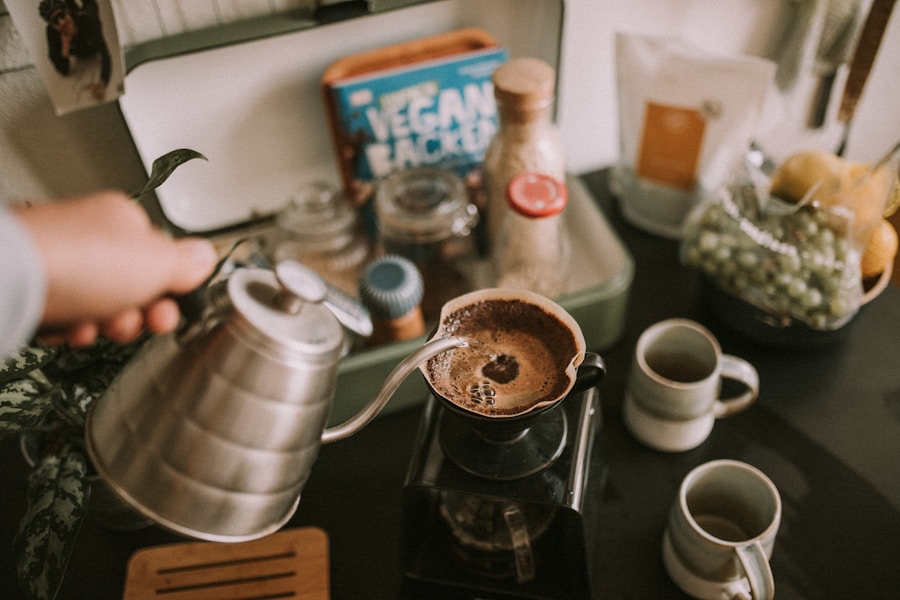
Pour-over (best for clarity and control)
Good when you want a slower ritual and cleaner flavor. It punishes inconsistency less than espresso, more than drip.
Guide:
How to Brew Pour Over Coffee — https://bilgebrew.com/blogs/from-the-bilge-blog/how-to-brew-pour-over-coffee
French press (best for body and “forgiving” strength)
It’s a strong option when you want a heavier mouthfeel and don’t want to babysit a machine.
Guide:
Best French Press Done Right — https://bilgebrew.com/blogs/from-the-bilge-blog/best-french-press-done-right
Espresso (best for intensity, worst for rushed mornings)
Espresso is great, but it’s the least forgiving method when you’re trying to get out the door.
If you’re troubleshooting:
Espresso Troubleshooting Guide — https://bilgebrew.com/blogs/from-the-bilge-blog/espresso-troubleshooting-guide
Espresso Ratios — https://bilgebrew.com/blogs/from-the-bilge-blog/espresso-ratios-ristretto-lungo
Water matters more than most people want to admit
If your water tastes off, your coffee will taste off. Filtered water is the simple fix. Aim for brew water in the typical range (about 195–205°F / 90–96°C) and don’t boil grounds aggressively (that’s a bitterness machine).
Breakfast pairings that don’t get cute
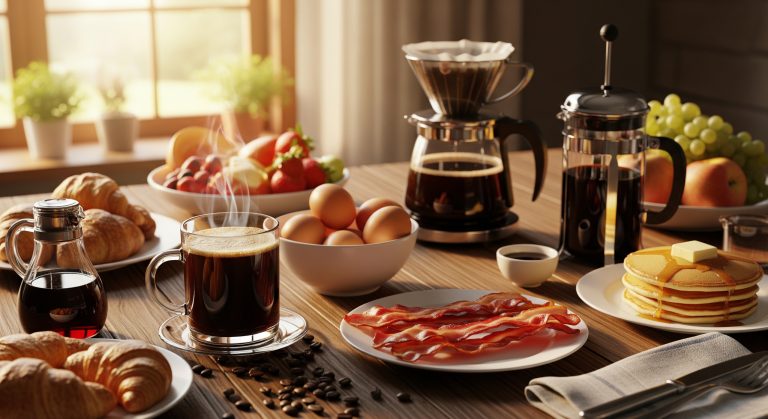
Pairing coffee with breakfast doesn’t require foodie language. You’re balancing fat, salt, and sweetness.
-
Eggs / bacon / sausage: medium-dark coffees hold up well
-
Oatmeal / toast / peanut butter: medium roasts tend to taste sweeter
-
Pancakes / waffles / pastries: coffees with chocolate/caramel notes feel “built for it”
-
Weekend treat angle: a flavored coffee can work when you want dessert vibes without dessert effort
Examples:
CUP OF JOE (Mocha) — https://bilgebrew.com/products/cup-of-joe-mocha-naturally-flavored-single-origin
SMOOTH SAILING (Vanilla Hazelnut) — https://bilgebrew.com/products/smooth-sailing-vanilla-hazelnut-naturally-flavored-medium-roast
A simple “set it and repeat it” breakfast ritual
If someone wants a routine that works without thinking:
-
Choose one brew method (drip or press for weekdays)
-
Choose one baseline coffee (medium or medium-dark)
-
Use the same ratio for a week
-
Adjust only one variable at a time (dose first, then grind, then brew time)
That’s how you get consistency without turning coffee into a hobby you don’t have time for.
FAQs
Is Bilge Brew Coffee a specific blend or a brand?
Bilge Brew Coffee Co. is a brand offering multiple roasts and styles. People typically choose based on brew method (drip vs espresso) and roast preference.
What’s the best roast for breakfast coffee?
For most people: medium or medium-dark because it’s forgiving and balanced. Dark can be great, but it’s easier to overdo and turn bitter.
How do I get more caffeine without making coffee taste worse?
Increase the coffee-to-water ratio first. If you still want more, consider coffees that include Robusta (higher caffeine), and keep the brew method consistent.
Why does my breakfast coffee taste different day to day?
Usually: stale beans, inconsistent grind, inconsistent dose, or water temperature swings.
What’s the easiest method for a reliable weekday cup?
Drip or French press. Espresso is rewarding but least forgiving when rushed.



+ There are no comments
Add yours