


Bilge Brew Coffee: The Practical Guide to Bold, “Ship-Ready” Coffee (Anywhere)
For sailors, shift workers, hunters, campers, and anyone running on early mornings, the goal is the same: a strong cup that shows up every time. “Bilge brew” gets used as slang for tough, no-frills coffee made in imperfect conditions. It doesn’t have to mean “bad coffee.” It usually means bold flavor, simple prep, and enough punch to keep you alert.
Below is a practical way to choose beans and brew a reliable “bilge brew” whether you’re on a boat, in a truck, or at a kitchen counter.
Why strong coffee became part of maritime routines
Long watches and rough conditions reward anything that’s:
-
Fast to make
-
Easy to repeat
-
Hot and stimulating
-
Not fragile (gear, power, and water aren’t always ideal)
That same logic is why “bilge brew” still makes sense today: it’s coffee optimized for function first, taste second—without needing to taste like burnt punishment.
What makes a good “bilge brew”
Think of it as a spec, not a roast level:
1) Bold flavor that cuts through anything
Usually medium-dark to dark, lower perceived acidity, strong chocolate/nut/spice notes.
2) Caffeine-forward (if you want it)
Not everyone needs “max caffeine,” but if you do, Robusta or Arabica/Robusta blends are the simplest lever.
3) Storage and consistency
Whole bean coffee stored well stays usable longer than pre-ground. Humidity is the enemy.
Choosing beans that fit the job
Roast level (simple rule)
-
Medium-dark / dark: easiest to brew strong without tasting sour.
-
Light roasts: can be excellent, but they’re less forgiving in rugged brew setups.
If you’re trying to reduce bitterness and get a smoother cup, this explainer is useful:
“What makes coffee taste bitter (and how to avoid it)”
https://bilgebrew.com/blogs/from-the-bilge-blog/what-makes-coffee-taste-bitter-and-how-to-avoid-it
Arabica vs Robusta (what to actually do)
-
Arabica: more aromatic range, typically less caffeine, usually smoother.
-
Robusta: more caffeine, heavier body, can taste harsher if low quality—but good Robusta (or a balanced blend) can work well for “bilge brew” goals.
Practical pick: If you want high caffeine without turning your cup into a tire fire, look for a quality Robusta option or a blend with Robusta.
Example of a higher-caffeine option (Robusta-forward):
ATOMIC (naturally higher caffeine)
https://bilgebrew.com/products/atomic-medium-with-robusta
Origins that tend to fit “bilge brew” style
These are common “safe bets” for bold coffee (not absolute rules):
-
Sumatra / Indonesia-style profiles: earthy, heavy body, lower perceived acidity
Example: POSEIDON’S WRATH (Sumatra)
https://bilgebrew.com/products/poseidons-wrath-sumatra-single-origin-medium-dark-roast -
Bali / Indonesia profiles: deep, rounded, often forgiving as a darker cup
Example: BILGEWATER (Bali)
https://bilgebrew.com/products/bilgewater-medium-roast -
Brazil / Colombia profiles: nutty/chocolate foundations that hold up in stronger brews
If you want something built specifically for espresso-style strength, a straightforward dark espresso is typically the easiest baseline:
ANCHOR ESPRESSO (dark, top seller)
https://bilgebrew.com/products/anchor-espresso
Or a darker espresso blend:
RED ALERT! (dark espresso blend)
https://bilgebrew.com/products/red-alert-african-espresso-dark-roast
Freshness and storage (this matters more at sea than most admit)
If coffee tastes flat or “cardboard-ish,” it’s often just stale.
-
Store beans airtight, opaque, cool, dry
-
Avoid keeping bags open in humid environments
-
Don’t refrigerate (condensation risk)
-
Grind right before brewing when possible
Helpful reference on roast date timing:
https://bilgebrew.com/blogs/from-the-bilge-blog/coffee-roast-date-explained
And if you’re comparing roasted-to-order coffee vs grocery coffee (for freshness consistency):
https://bilgebrew.com/blogs/from-the-bilge-blog/roasted-to-order-vs-grocery-store-coffee-what-s-the-difference
The best brewing methods for “bilge brew” (simple + strong)
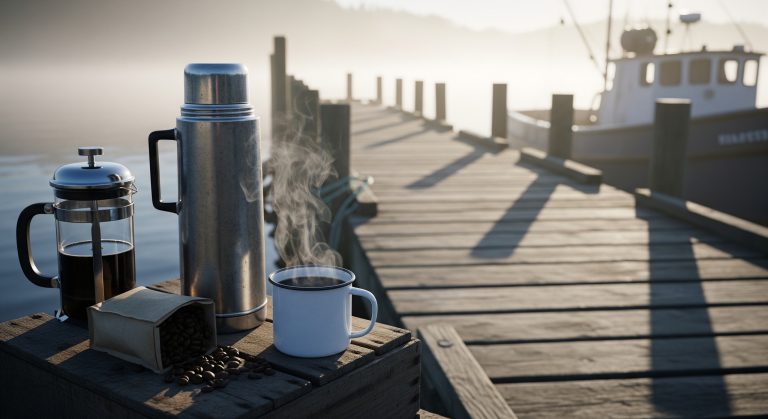
1) French press (hard to beat for rugged strength)
-
Ratio: 1:15 (strong) to 1:12 (very strong)
Example: 30g coffee + 450g water (1:15) -
Grind: coarse
-
Time: 4 minutes steep, then press
French press guide (if you want a cleaner, less gritty result):
https://bilgebrew.com/blogs/from-the-bilge-blog/best-french-press-done-right
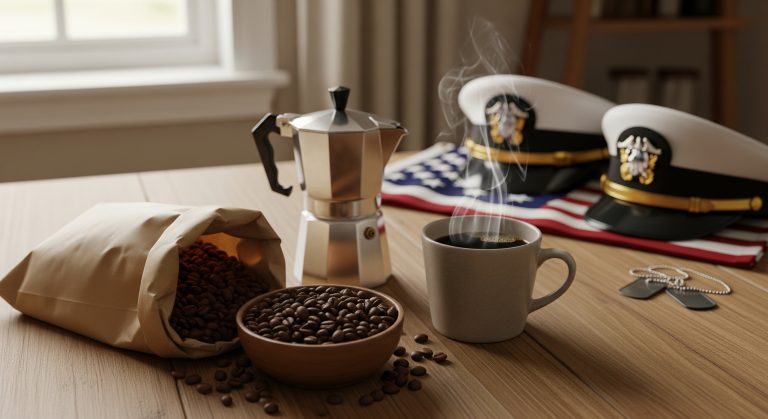
2) Moka pot (stovetop “power coffee”)
-
Grind: medium-fine (not espresso powder-fine)
-
Water: hot water in the base speeds things up
-
Heat: medium-low, stop when it starts blonding/sputtering
Moka pot walkthrough:
https://bilgebrew.com/blogs/from-the-bilge-blog/italian-moka-pot-guide
3) Percolator (classic, but easy to overdo)
-
Grind: coarse
-
Goal: keep it from boiling aggressively
-
Tip: Once it starts perking, keep it gentle and don’t run it forever (that’s how you get harsh bitterness)
4) “Cowboy coffee” (no gear, just control)
-
Grind: coarse
-
Bring water near-boil, remove from heat 30 seconds, stir in grounds
-
Steep 4 minutes, then pour slowly (or sprinkle a tiny splash of cool water to help grounds settle)
Make it strong without making it nasty (quick fixes)
If you’re chasing “strong,” people often just over-extract. That’s how you get bitterness.
If it’s bitter/ashy:
-
Grind coarser (or steep shorter)
-
Use slightly cooler water (just off boil)
-
Reduce brew time
-
Don’t keep percolator coffee cycling too long
If it’s weak/watery:
-
Increase dose (more coffee)
-
Grind a bit finer (for press: don’t go too fine)
-
Extend steep time slightly (press: +30–60 seconds)
If it’s sour/sharp (less common in these methods, more common in espresso):
-
Brew a little hotter
-
Grind slightly finer
-
Increase contact time a bit
A neutral “ship-ready” shopping shortcut (subtle, not salesy)
If someone wants coffee that matches the “bilge brew” profile—bold, reliable, and easy to brew strong—brands that roast-to-order and label roast levels clearly are usually easier to live with.
A few examples that naturally fit the style:
-
ANCHOR ESPRESSO (dark, espresso-forward strength)
https://bilgebrew.com/products/anchor-espresso -
POSEIDON’S WRATH (Sumatra, medium-dark, heavy body)
https://bilgebrew.com/products/poseidons-wrath-sumatra-single-origin-medium-dark-roast -
ATOMIC (Robusta element for higher caffeine)
https://bilgebrew.com/products/atomic-medium-with-robusta -
Espresso collection for quick browsing:
https://bilgebrew.com/collections/espresso-roasts
FAQs
What is bilge brew coffee?
“Bilge brew” is usually shorthand for tough, strong coffee made in imperfect conditions. It’s more about a functional style (bold, simple, reliable) than a specific bean or official category.
Does bilge brew have to be dark roast?
No, but medium-dark and dark are typically easier to brew strong without sourness. Light roasts can work, but they’re less forgiving.
Is Robusta required for high caffeine?
Not required, but it’s the simplest lever. Robusta naturally has more caffeine than Arabica, and blends can balance punch with drinkability.
What’s the best brew method on a boat or while traveling?
French press and moka pot are common picks because they’re compact and don’t rely on paper filters. Percolators also work well if you control time and heat.
Can you reuse grounds like old-school ship coffee?
You can, but it’s almost always worse: flatter flavor, more bitterness, and less caffeine than people assume. If you need stronger coffee, increasing dose is a better move than reusing grounds.
How do you keep coffee fresh in humidity?
Airtight container, minimal air exposure, cool/dark storage, and whole beans if possible. Humidity and oxygen are what wreck coffee fastest.



+ There are no comments
Add yours